Property Access Restored Through Controlled Clearing
Forestry Mulching in Lebanon for properties overwhelmed by invasive honeysuckle and thick undergrowth
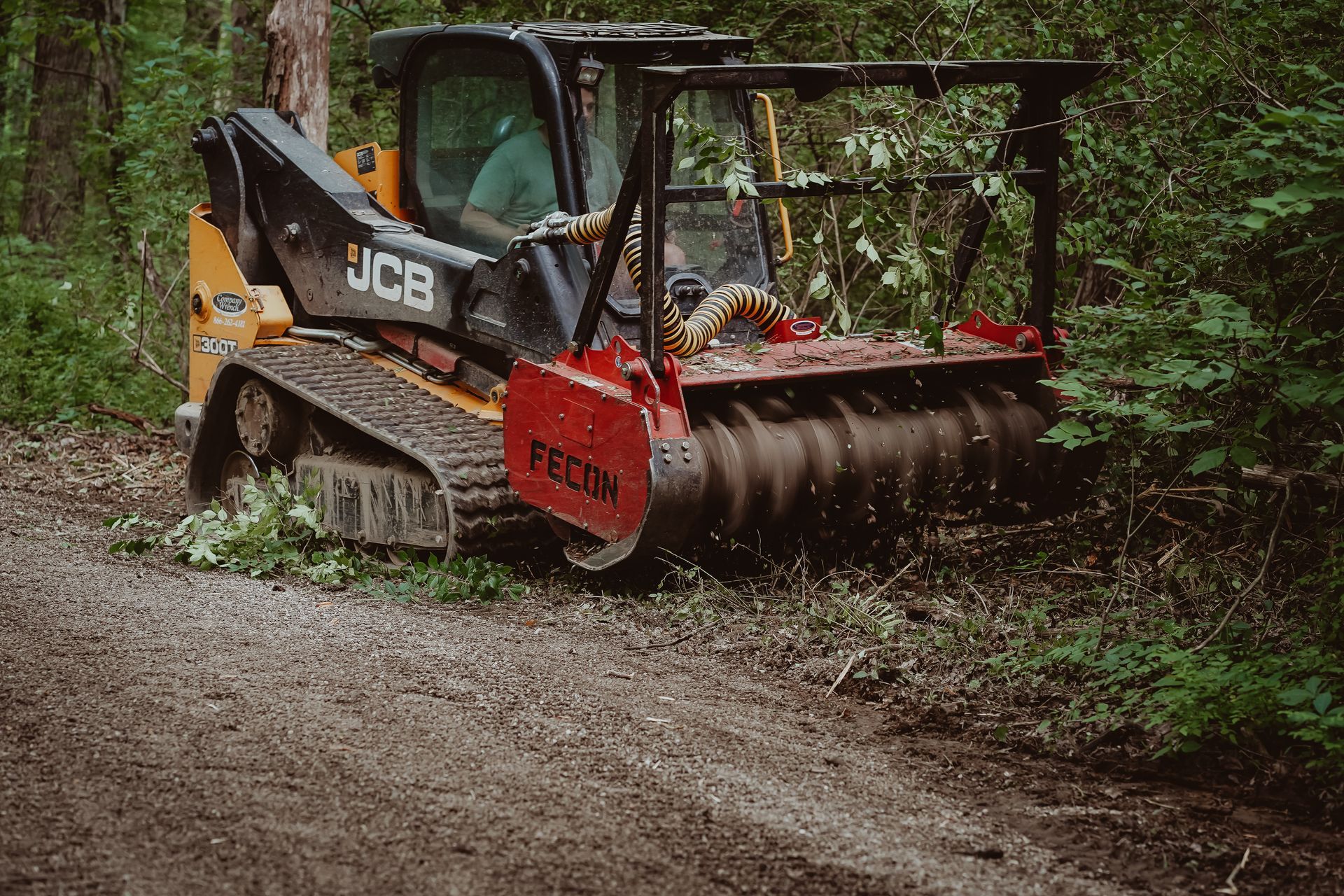
Landflow Services completes forestry mulching across rural Ohio properties where invasive vegetation has blocked trails, consumed fence lines, or made acreage unusable. You'll notice the difference immediately—areas that required machetes and hours of manual work become navigable in a single pass, and the mulched material left behind decomposes into the soil rather than piling up as debris. This approach works particularly well on properties where honeysuckle has formed impenetrable thickets or where small trees and brush have overtaken hunting land.
The mulching process grinds vegetation into fine organic material that covers the ground and suppresses regrowth while protecting soil structure. Unlike traditional clearing that disturbs topsoil and requires debris hauling, forestry mulching equipment processes everything in place, reducing ground disturbance and eliminating the need for burn piles or disposal fees. The mulch layer you're left with stabilizes slopes, retains moisture, and gradually breaks down to improve soil quality.
Schedule a property evaluation to identify specific clearing zones and discuss equipment access requirements.
How Mulching Handles Dense Vegetation Without Hauling Debris
The equipment used in forestry mulching can process small trees up to several inches in diameter, thick brush, and tangled vines without requiring multiple pieces of machinery or separate debris removal. You'll see the mulcher move through overgrown areas and leave behind a uniform layer of shredded material that settles into the landscape, rather than bare soil exposed to erosion.
After clearing, your property shows visible lanes or open areas where sight lines extend fully, trails become accessible to ATVs or foot traffic, and fence lines reappear from under years of overgrowth. The mulched surface allows you to walk the property without wading through brush, and mowing becomes possible in areas that were previously impassable. Properties cleared with this method typically remain easier to maintain because the mulch layer slows the return of invasive species.
Forestry mulching works efficiently on wooded terrain and uneven ground where tracked equipment can navigate slopes and obstacles. Projects often include trail system creation for hunting access, lot preparation for future building, restoration of overgrown fence lines, and reclaiming acreage that's been neglected for years. Pricing reflects the density of vegetation and total acreage rather than hourly rates, and turnaround times depend on site conditions and equipment availability.
What Property Owners Want to Know Before Clearing
Forestry mulching projects in Southwest Ohio often involve invasive honeysuckle removal and brush-heavy terrain that's accumulated years of unchecked growth. These answers address the practical considerations most relevant to rural property management.
What size trees can forestry mulching equipment handle?
The mulching equipment processes brush, saplings, and small trees typically up to six inches in diameter, along with vines and dense undergrowth that would otherwise require hand cutting and hauling.
How does mulching compare to traditional clearing methods for overgrown properties?
Mulching grinds vegetation into organic material that stays on-site, eliminating debris piles and reducing soil disturbance compared to bulldozing or manual clearing that leaves bare ground and requires waste removal.
When is the best time to schedule forestry mulching in Lebanon?
Any time the ground is dry enough to bear the weight of the muulching equipment. Firm ground provides best results.
What happens to the mulch left on the ground after clearing?
The shredded material decomposes over several months, enriching the soil and creating a natural barrier that suppresses weed germination and reduces erosion on slopes or uneven terrain.
How long does it take to clear a typical overgrown lot or fence line?
Clearing time depends on vegetation density and acreage, but most residential projects involving fence line restoration or trail creation are completed within one to three days once equipment is on-site.
Landflow Services handles projects across properties where thick brush and invasive vegetation have reduced usability and accessibility. Request a free forestry mulching estimate to review your property's specific clearing needs and discuss equipment access routes.